

Our History
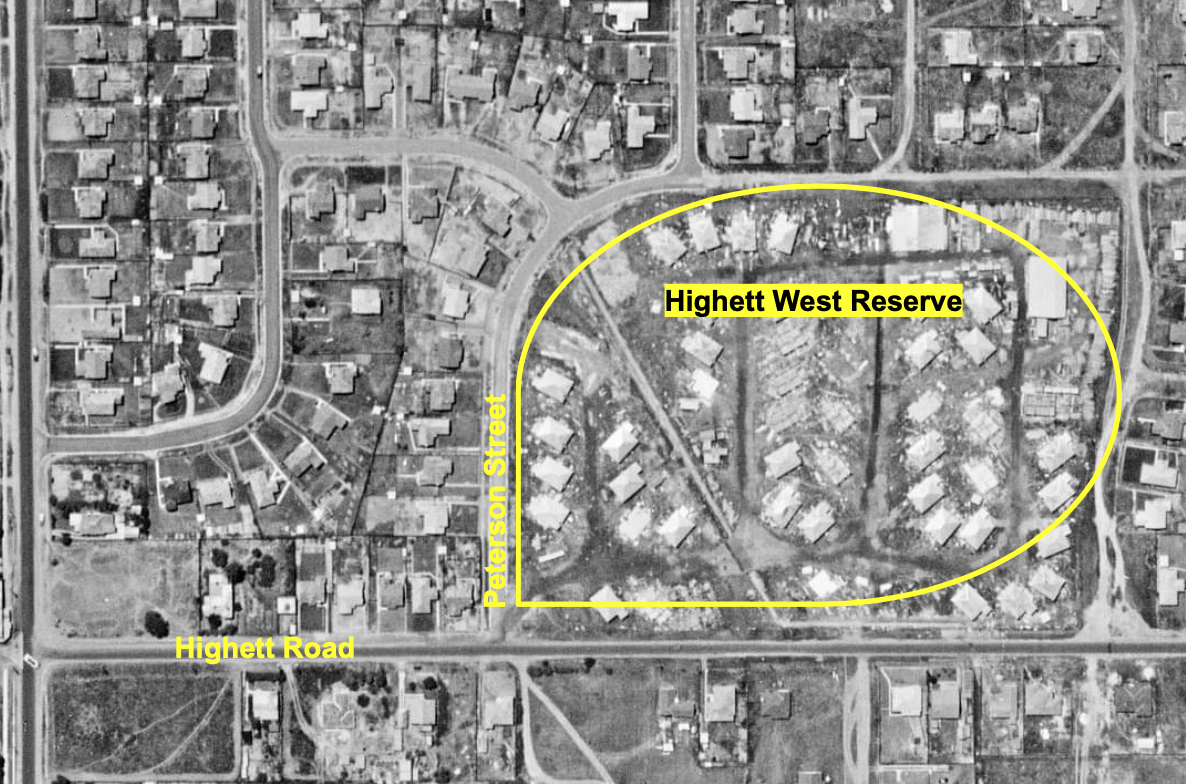
Highett Road and Peterson Street as it was in the 1950’s.*
This was the post-war era. The highlighted area was used by a construction company to build houses to be relocated to Latrobe Valley. The Moorabbin Council (now known as Bayside City Council) took over this area and cleared it for recreational activities.
A brief history of Highett
Highett's most substantial residential growth began in the 1950s. Industry was attracted to the area, including a large CSIRO research facility, which today is known as the new Highett Common residential precinct. However, it was not until the mid to late 1950s that Highett really began its journey into suburbia. Young couples helped develop the entire infrastructure, literally from the earth up. Houses, shops, the RSL, youth clubs, churches, and all manner of amenities rose from the bare earth quite rapidly. Highett shopping centre was a very busy place and even had a picture theatre. Many houses were built by the Housing Commission, as were apartment blocks. The streets were simply narrow strips of tarmac with no curbs or gutters. Growth was so rapid that the then Moorabbin Council could not keep up, and there was no obligation to curb-and-gutter property before building. During heavy rain, the area around Livingston Street, Worthing Road, Highett Road and Donald Street was regularly flooded up to a depth of two metres.
Highett West Reserve
In the early 1950’s, new housing estates opened up in the Highett and surrounding areas. Many young families moved from inner Melbourne to this new area. The area bounded by Peterson Street, Telford Street and Highett Road was a haven for a tip. It was used by builders constructing for the Housing Commission in local and regional areas. There are archived aerial photos of the reserve showing these houses. The reserve was also used as a training track by Dove Brothers (the local milkmen) for their trotters. Eventually, when the housing lots were completed, the Moorabbin Council cleared the area and converted it into a recreational
reserve. After not too long, several residents called a meeting and a letter drop was arranged for people to meet at the reserve, then known as Highett West. A Highett local, Joe Vergona, and his fruit truck were used as a platform for speakers, and the attendance was well supported. Speakers included Bill Saunders of the VRC, Councillors Brian Stuart-Jones, Gerald Basterfield, and many residents. The reserve would later be known as Peterson Street Reserve and has maintained two sports ovals.
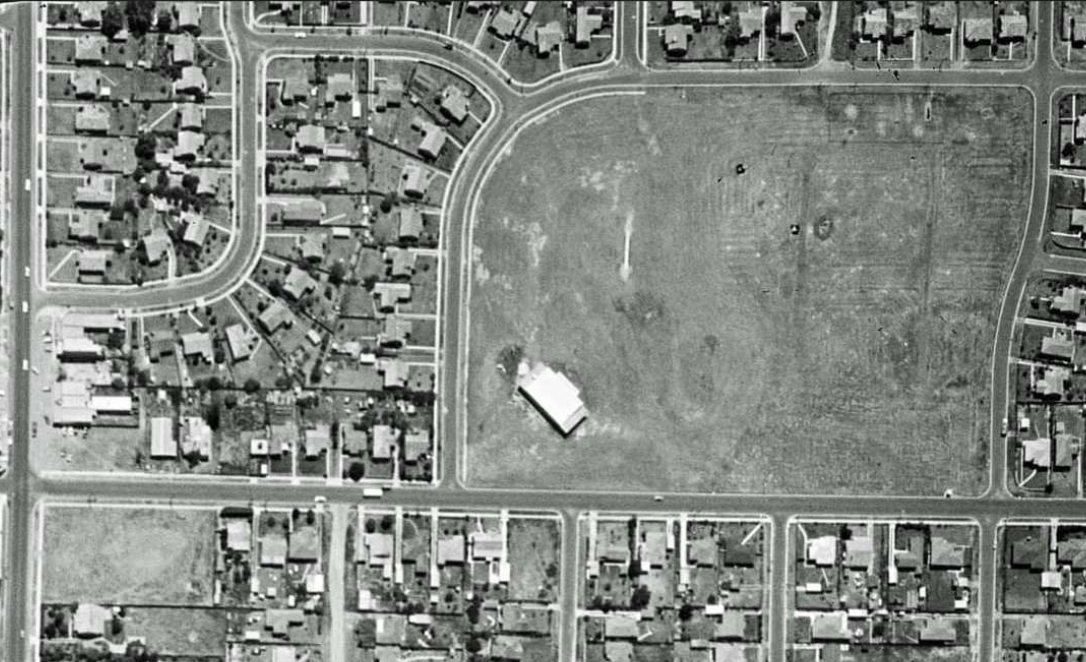
Photo: Highett West Reserve 1960 with the Highett Youth Hall in view and no other sports pavilions.
These would be added later also notice no playground or landscaping.
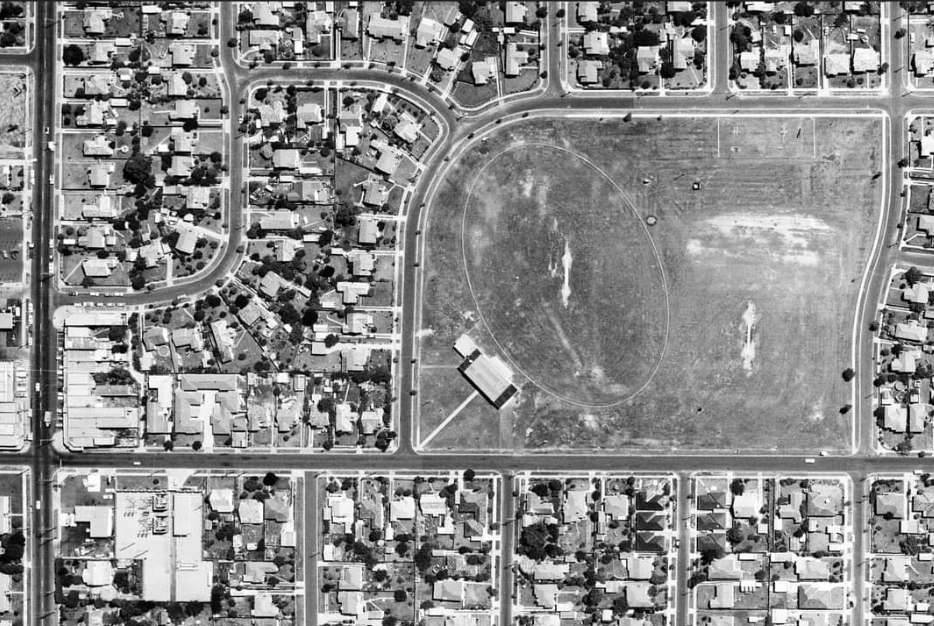
Photo: Highett West Reserve 1970 with cricket pitches in sight for ovals 1 and 2.
The Highett West Community Youth Centre is also in view.
Highett West Community Youth Club
From the public meeting, the Highett West Planning and Development Association was formed. Bill Saunders was President, Clarie Peck was Secretary, and Joe Vergona was Treasurer. With the new housing developments and the many children, the residents used the reserve for football and cricket. The committee also established the Highett West Community Youth Centre. Other people involved included Vern Barry, Neil Appleford, Neil Bencraft, Ian Johnson, Ralph Davies, Les Duncan, as well as many other local families. In 1960, the Highett West Hall was constructed with the help of the Moorabbin Council. The funds were raised by conducting a carnival and circus at the reserve. The Moorabbin Council matched the funds raised by this event, and the hall was built on the reserve.
On Wednesday, 8th February 1961, the Highett West Community Youth Club was officially launched by the City of Moorabbin Council. Don Stevens chaired the proceedings and had guest speakers Ewan Tucker and Neil Bencraft.
The youth club provided many activities for the many kids in the area, including trampolining, boxing, wrestling, table tennis and a Friday night dance.
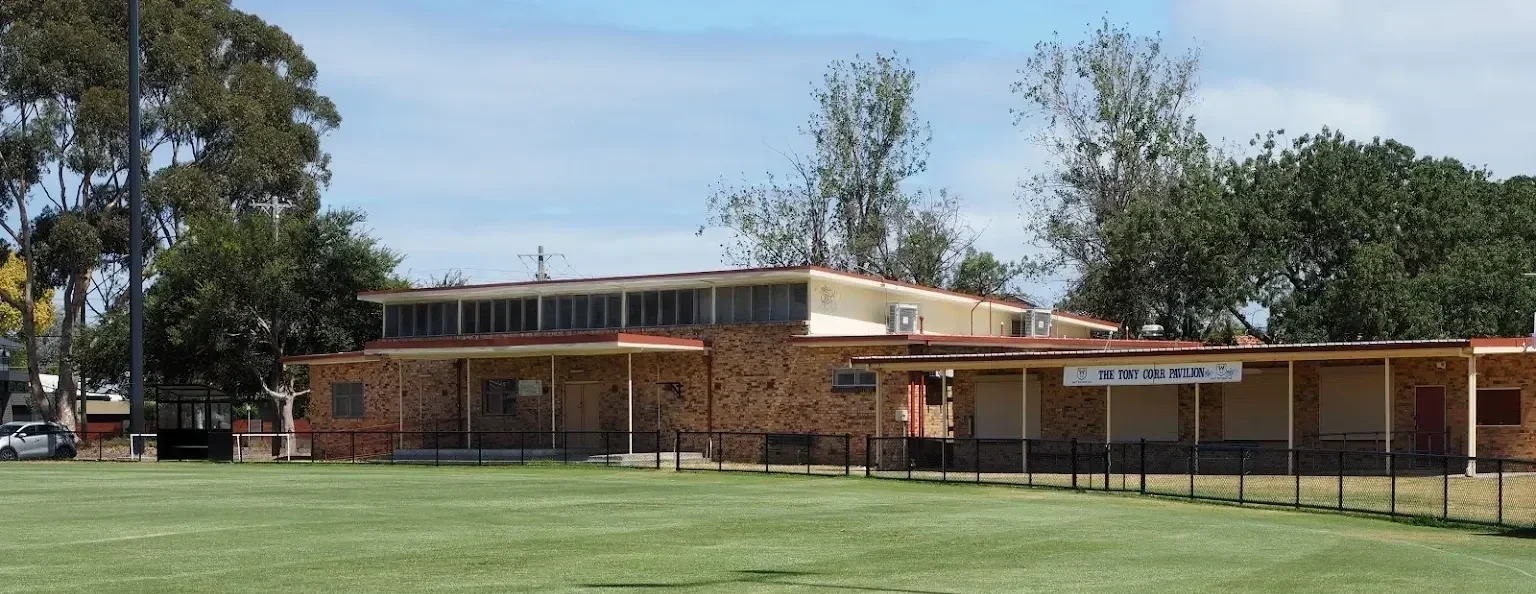
From this youth club, the Highett West C.Y.C. Football and Cricket Clubs were formed. To this day, the Bayside City Council maintain the original building for youth services, albeit with no connection with either Highett West Cricket Club or Hampton Hammers Football Club.
The Peck Family
The Peck Family lived at No.1 Peterson Street, and their family was heavily involved not only in the Community Youth Club but also in ensuring the football and cricket teams were well organised. In those early years, there was no change room, no social room, no bar or canteen. Often, social gatherings would be held at No.1 Peterson Street, and the garage would be used as a change room facility. Also, the administrative work for the cricket club and any other off-field business was taken care of by the Peck’s.
Highett West Cricket Club would later acknowledge, in particular, Beryl Peck, in 1977 by introducing a senior club champion trophy. This would change in 2003 to be named the Peck Family Memorial Trophy.
Peter & Earl Peck
When the Highett West C.Y.C. entered its very first junior under sixteen team in the City of Moorabbin Cricket Association in 1962, Earle Peck was elected as captain. He lead from the front by taking wickets and making runs – even though team success was little. The following year in 1963, the very first senior team was entered in the C.M.C.A. and older brother Peter Peck was elected captain and Earle was vice captain.
The Peck brothers combined were the nucleus to what would become a successful first year in senior cricket – with the team reaching the grand final of ‘F’ Grade. In addition to playing Peter took on the responsibilities of what a President’s role would be and Earle took on the responsibilities of what a secretary and treasurer’s role would be. Whilst Peter being the older brother, both he and Earle were still in their teenage years, which was a remarkable achievement to oversee the running of the new club in its formation years. Both Peter and Earle held these positions for a number of years and it was their professional approach that established Highett West C.Y.C. in the C.M.C.A. that saw the club progress from the lowest senior grade ‘F’ to the highest grade ‘A’ within seven seasons since formation. Peter & Earle were very well respected in the C.M.C.A. for their hard work and commitment in the early seasons of the club which ensured growth in the years to follow with additional junior and senior teams. As players in the C.M.C.A. both were regarded as fine cricket players – always upholding the values of cricket first. Peter was an opening bat, run machine. He twice scored over 1000 runs in a season – a C.M.C.A. record at the time. He was a hard working batsman, with a unique batting stance and he was always very hard to get out. Earle was an opening bowler, who was feared for his pace and accuracy. He was not a tall man, however he could bowl all day whilst sustaining his pace.
Earle was also a magnificent batsman with a classical style. He would often bat high in the order and he made many runs for the club. Both Peter and Earle were outstanding fieldsmen. Peter could wicket keep as well as being excellent in the field. Earle was great in the slips position and equally in the outfield. The club would not have progressed through the grades if not for these wonderful cricket players. They set the standards for the development and culture of the cricket club for the years to come.
Peter Peck
1962-63 – 500 runs
1963-64 – 1100 runs
1964-65 – 1030 runs
1965-66 – 720 runs
Highest score: 181
Total number of centuries: 8
Two-time C.M.C.A. fielding award winner
Two-time C.M.C.A. Representative player
Earle Peck
Best Bowling: 8 for 22
7 for 8
7 for 13
7 for 26
7 for 52
Total number of centuries: 2
Two-time C.M.C.A. Representative player
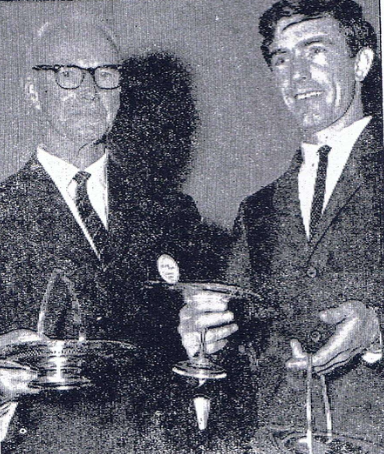
Photo: Peter Peck receives three C.M.C.A trophies from C.M.C.A. President Harry Morgan. Peter won the senior batting average, aggregate runs and the ‘D’ grade fielding awards in 1964-65.
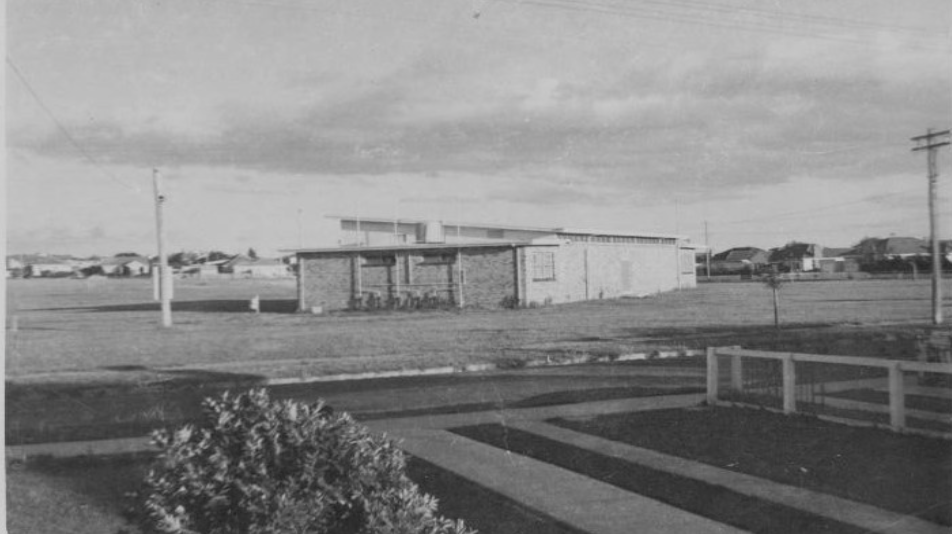
Photo: 1970 - Highett West Community Centre taken from the front yard of the Peck Family home, No.1 Peterson Street, Hampton East.
Highett West C.Y.C. Football Club (1961-1972)
Highett West Football Club (1973-1988)
The Highett West C.Y.C. football club was formed in 1961 with an under-fifteens team in the Caulfield-Oakleigh District Football League. This league would, in 1963, form the South East Suburban Football League. The U15 team was coached by Ralph Davies and captained by Anthony (Tony) Corr. The team performed well with above-average success. This led to two teams the next season – under 15 and under 17.
With the expected future growth of both football and cricket clubs, facilities at Highett West were required. In 1962, after having changed rooms across the road in the Peck’s family garage, a small building was erected next to the Highett West Community Youth Centre to be used as change rooms. All expenses were covered by the Highett West Community Youth Centre with the help of local builder Cec Randall and other volunteers. However, later in that year, gale-force winds would damage the roof of the newly built change rooms, which incurred more expenses for the Youth Centre to repair the damage. The Highett West C.Y.C had junior sides wearing the colours of red and black.
By the 1970’s the S.E.S.F.L. was growing, and future progressive meant clubs required both senior and junior teams. At the end of 1972, a merger brought together the neighbouring sports club Highett Y.C.W. with its two senior teams and Highett West C.Y.C with its three junior teams – to form Highett West Football Club.
The colours were changed to navy blue and white hoops, and the kookaburra as the mascot. The original change rooms were refurbished in 1973 by Dave Cousins. By this time, the Highett West Football Club were no longer affiliated with the Highett West Community Youth Centre.
The City of Moorabbin Council promised to have the clubroom extensions complete and ground works done, which did not eventuate at the time. The growth of the club could not have taken place with the rooms as they were because of the size, so plans were drawn up for a grant of $4,500, and contracts were signed to get the rooms done. All labour was to be done by the club to save money. It was a hard battle before the rooms were finally finished, but the end result was worth the effort.
People were enjoying football in the winter and cricket in the summer, year after year. It wasn’t until 1981 that further expansions to the facilities for sports were completed. The addition of changerooms for both oval one and oval two was created; however, the original concept for the facilities was for a double-storey, multi-change room & social room building, which was vetoed by local residents. The final design meant a disjointed arrangement of facilities that surround the reserve.
In the S.E.S.F.L., success was limited for the footy club, although they did field two senior and a number of junior teams, which battled competitively. In 1979, the under-18 team reached the Grand Final only to be defeated in a close contest. Success avoided the senior teams until John Lolas was appointed coach in 1984 and 1985, when a strong competitive team was built, culminating in a second division finals birth in both years. However, a premiership continued to elude them. The season of 1986 was a different story; the hard work of the previous years paid off with the Kookaburras fielding one of the most dominant teams the second division had ever seen. With club legends like Max Faulkner, Brian Fallon and Chris Robinson at their peak, coach Lex Marshall led the Kookaburras to their first senior premiership, beating North Kew in the Grand Final and finishing the year undefeated. The reserves finished the year as runners-up. In 1987, the club was promoted to Division One, where it played strong clubs like Cheltenham, Parkdale and East Brighton. One of the most memorable wins in the club’s history occurred during this season when, on a windswept afternoon at Peterson St, the Kookaburras had a victory over one of the most powerful suburban football clubs, Noble Park. A proud day for the club in front of the usual big home crowd.
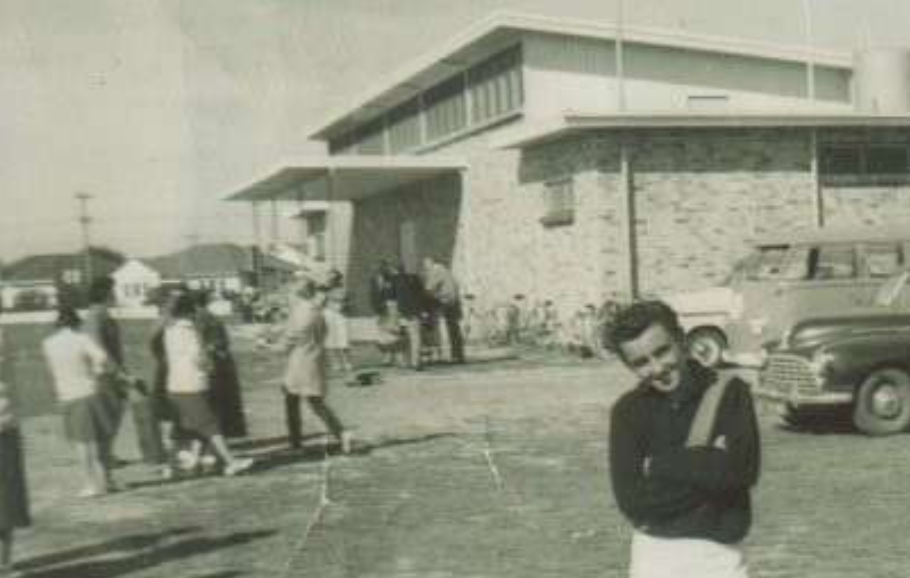
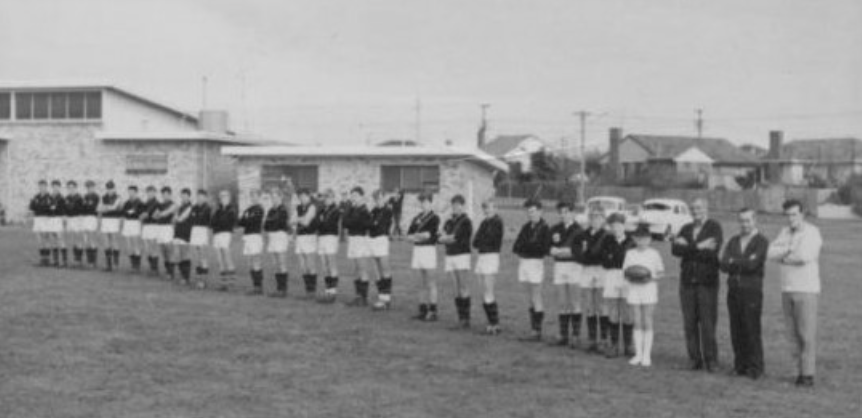
Photo: Anthony Corr (aged 14) at Highett West Reserve before an Under 15 football match in 1961.
Early 1960’s photo of Highett West C.Y.C. Football team at Highett West Reserve with the original sports pavilion for change rooms.
Highett West C.Y.C. Theme song
(To the tune of ‘Here we are again’)
Highett West are we,
Premiers we will be,
All good team-men on to victory,
We’re the one to beat ‘em – we’ll show them the way
Red and Black the winners every Saturday
We’re not the Team to brag
But we’ll bring home the Flag,
“Kookas” for Premiers,
The Pennant’s in the bag,
Never mind opponents – they’re just another team, Highett
West’s the answer to a Coach’s dream.
Highett West are we. Premiers we will be.
All good teammates, ON TO VICTORY
Highett West C.Y.C. Cricket Club (1962-1972)
Highett West Cricket Club (1973-present)
The Early Years 1960’s
Following the success of the H.W.C.Y.C. under-fifteens football team, in 1962, the Highett West C.Y.C. formed a cricket team, starting with an under-sixteens team in the City of Moorabbin Cricket Association. The captain was Earle Peck; other members were Chris Ingleby, Robin Bailey, Vince Bateman, Neil Bencraft Junior, and John Weir. Some of the people helping out with the youth clubs cricket team were Neil Appleford, Neil Bencraft Snr, Vern Barry, Cec Randall, Joe Crump, Ralph Davies, Les Duncan, Ian McKenzie, Clarie Peck, as well as the Bridger and Corr Families. In that very first season, the cricket club had little success.
The 1963-64 season saw the inaugural 1st XI senior cricket team starting in the lowest grade ‘F’ of the C.M.C.A. competition. Team members were Peter Peck (Captain), Earle Peck, Gary Harvey, Robin Bailey, Vince Bateman, Neil Bencraft Jnr, Chris Ingleby, John Weir, Tony Corr, Dave Cousins, Brian Quinn and Gordon Moat. Peter Peck and Earle Peck organised the entire off-field duties for the club in the roles that today would be completed by the President, secretary & treasurer. A lot of the work behind the scenes was completed by the Peck’s – ensuring the club was well controlled. The 1st XI had a successful season, reaching the final only to lose to East Bentleigh. With good performances, the senior XI were slowly elevated up the CMCA grades.
In 1964-65, the cricket club had its 1st XI promoted to ‘D’ grade and a 2nd XI was entered in ‘F’ grade. Gordon Moat was captain of the 2nd XI, and people from Gary Harvey, Kevin Harvey, Glen Macdonald, Brian Bridger, Grant Bell, John Brennan, Gordon Thomas & Keith Unwin established themselves as Highett West cricketers. Peter Peck makes 1022 runs in the 1st XI and receives the CMCA Aggregate Runs Award. In the 2nd XI, John Brennan takes a club record 9 wickets for 27 runs, including a hat-trick versus Sandringham. He then takes 6 for 29 in the second innings, giving him match figures of 15/56. Peter Peck also tops the CMCA in 1966-67 with 753 runs. Throughout the 60s, Peter would go on to make eight centuries.
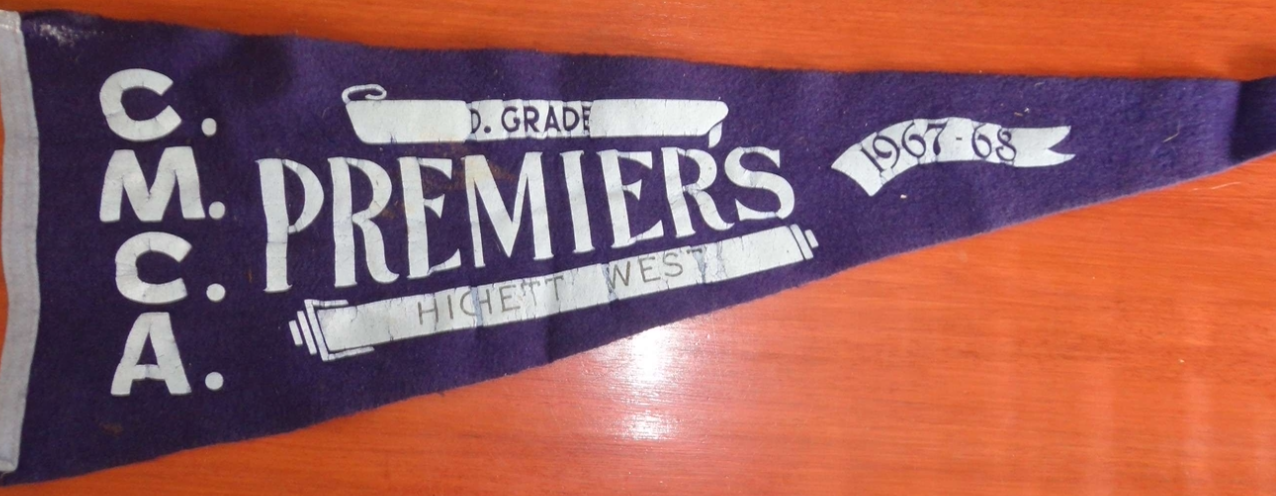
In 1965-66, the Under 16 team gave Highett West C.Y.C. its first premiership, defeating Bentleigh RSL in the ‘U16C’ Grade Final. The 1967-68 season was a breakthrough year as the 1st XI came through with the club’s first senior premiership in ‘D’ Grade.
By the 1969-70 season and after seven seasons in the C.M.C.A., the 1st XI were promoted with the highest honour and were playing in ‘A’ Grade. Known today as Longmuir Shield. Unfortunately, the scorebooks from the early days (1962 until 1970) are lost.
Cricket Club during the 1970’s
Following the progression and changes of the football club in the 1970’s, the cricket club aligned the developments as well. E.g. club colours and mascot. Senior 1st XI cricket players from the likes of Peter & Earle Peck, Tony Corr, and Kevin Harvey were top performers throughout the 70’s. However after three seasons in ‘A’ Grade and little success, the 1st XI drop down to ‘B’ grade then further down to ‘C’ grade. The football and cricket clubs change colours to navy and white and adopt the kookaburras as a mascot. There was some success throughout the three senior teams in the mid 1970’s producing several finals but unfortunately no premierships. In 1970-71, Earle Peck finishes with 41 wickets for the season, and proves to be one of the quickest bowlers in the CMCA. The 1974-75 season was a great year for the club. Tony Corr receives a CMCA award for best batting average in ‘C’ Grade. The 1st XI was Runners Up in ‘C’ Grade losing to Bentleigh ANA.
The same season the 2nd XI was victorious in ‘G’ Grade, bringing home a premiership pennant. In 1975-76 the 2nd XI elevated to ‘F’ Grade and continued success reaching the final, only to lose to Hampton United. In 1977-78 the 3rd XI were another unlucky team to finish Runners Up in ‘I’ Grade, losing to local rival East Sandringham Boys Club. In 1978-79 the Under 14 team were Runners Up in ‘C’ Grade but victorious the next season defeating Cheltenham Church of Christ.
The club awards the first group of life membership to Gary Harvey, Earle Peck, Tony Corr & Grant Bell.
Photo: C.M.C.A Premiership Pennant 1st XI “D” Grade (1967-68)